LED posters
Outdoor LED poster 640×1920 mm: from 4500 nit, P2 to P5
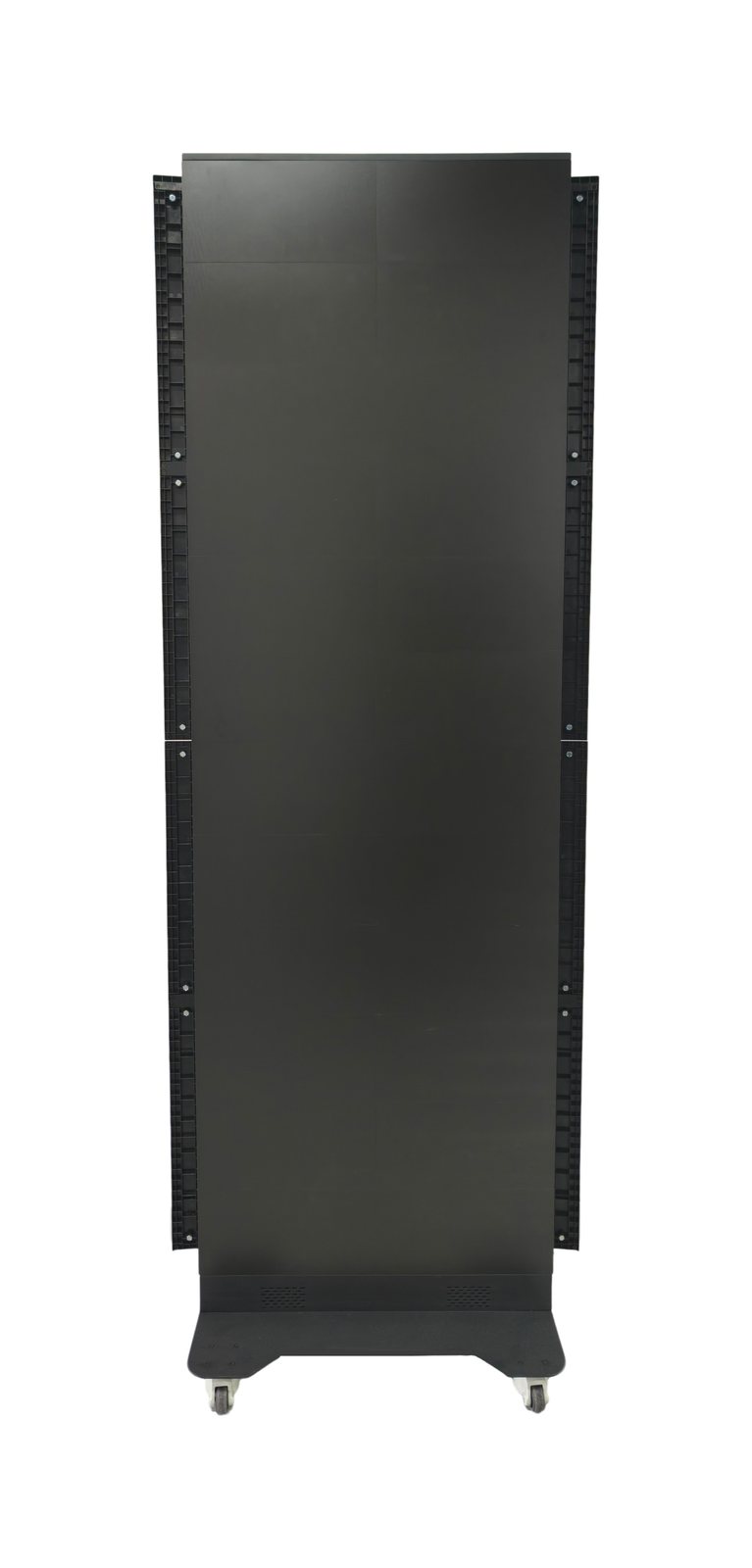
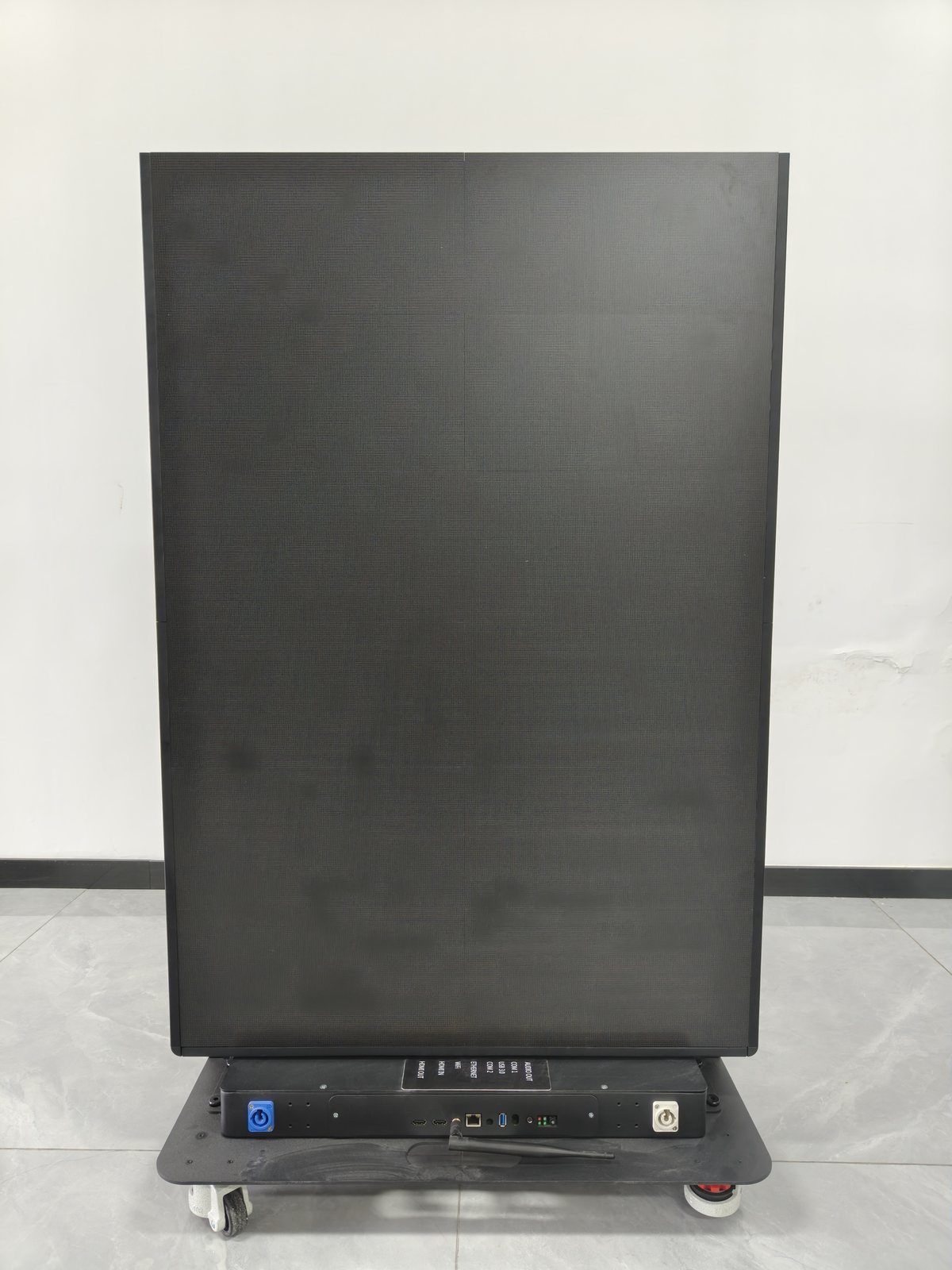
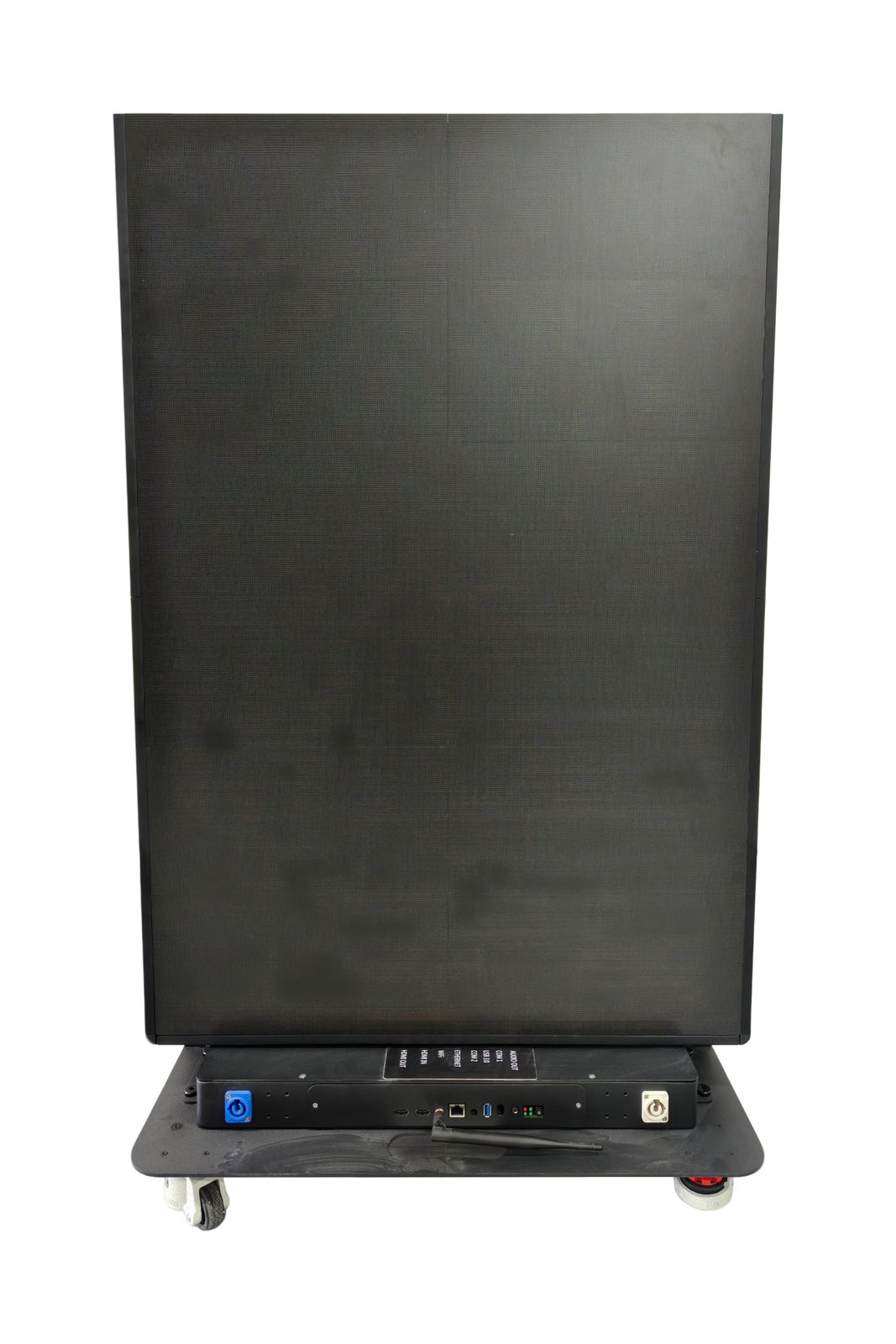
A freestanding 640 × 1920 mm LED poster for outdoor light: brightness from 4500 nit, pixel pitches from P2 to P5 and a screen of 128 × 384 to 320 × 960 pixels. It comes as a fixed, a foldable or a die-cast foldable version: the fixed and foldable cabinets are serviced from the back, the die-cast foldable from the front, and all able to join side by side into a wider screen. Built for outdoor use, with a rating of IP54 in the specification. Assembled at our Shenzhen assembly factory and shipped EXW / FOB Shenzhen.
- From 4500 nit
- P2 to P5
- IP54
- 3 versions
- Front service: die-cast foldable
- Rear service: fixed and foldable
- Daisy chain
Key specification
| Parameter | Value |
|---|---|
| Screen size | 640 × 1920 mm (25.2 × 75.6 in), 1.23 m² |
| Resolution | 128 × 384 px (P5) to 320 × 960 px (P2); 208 × 624 px at P3.076 |
| Brightness | From 4500 nit |
| Pixel pitch | P2, P2.5, P3.076, P4, P5 |
| Refresh rate | ≥3840 Hz |
| Protection | IP54 |
| Service | Front: die-cast foldable. Rear: fixed and foldable |
| Versions | Fixed, foldable, die-cast foldable |
| Daisy chain | Yes, joinable; one pitch per chain |
| Power supplies | 4 × 300 W; power supply can be changed (Optional) |
| Control system | NovaStar + Mean Well PSU (default); Huidu or Colorlight (lower-cost option) |
What is an outdoor LED poster?
An outdoor LED poster is a freestanding, portrait LED screen with a built-in player, made bright enough to stay readable in daylight. This model is 640 × 1920 mm, starts at 4500 nit and is built for outdoor use, so it can stand at a storefront, an entrance or an event area. It is a direct-view LED screen, not an LCD kiosk, and some buyers know this format as an LED pylon. Content is loaded over Wi-Fi, LAN or USB, and the poster then plays on its own.
Why brightness from 4500 nit matters
Indoor posters start at 500 nit, which suits room lighting. Outdoors, daylight washes out a screen of that brightness and the picture loses contrast. From 4500 nit this poster starts at about nine times the indoor level, which is what keeps text and video readable on a bright day. Direct sun on the front still lowers contrast on any LED screen, so the position of the poster matters too.
Brightness can be scheduled by time: bright in daylight, lower in the evening to avoid glare and cut consumption. A refresh rate of ≥3840 Hz also helps video look smooth and reduces flicker when the screen is filmed with a phone.
Three versions, one screen size
The screen is 640 × 1920 mm, with the same modules, brightness and pitches. The versions differ in the cabinet.
| Version | Cabinet | Folds | Receiving cards | Weight |
|---|---|---|---|---|
| Fixed | Fixed cabinet, joinable | No | 1 | about 54 kg |
| Foldable | Foldable cabinet, joinable | Yes, to 960 mm height | 2 | Quoted per order |
| Die-cast foldable | Die-cast cabinet, joinable | Yes | 4 | Quoted per order |
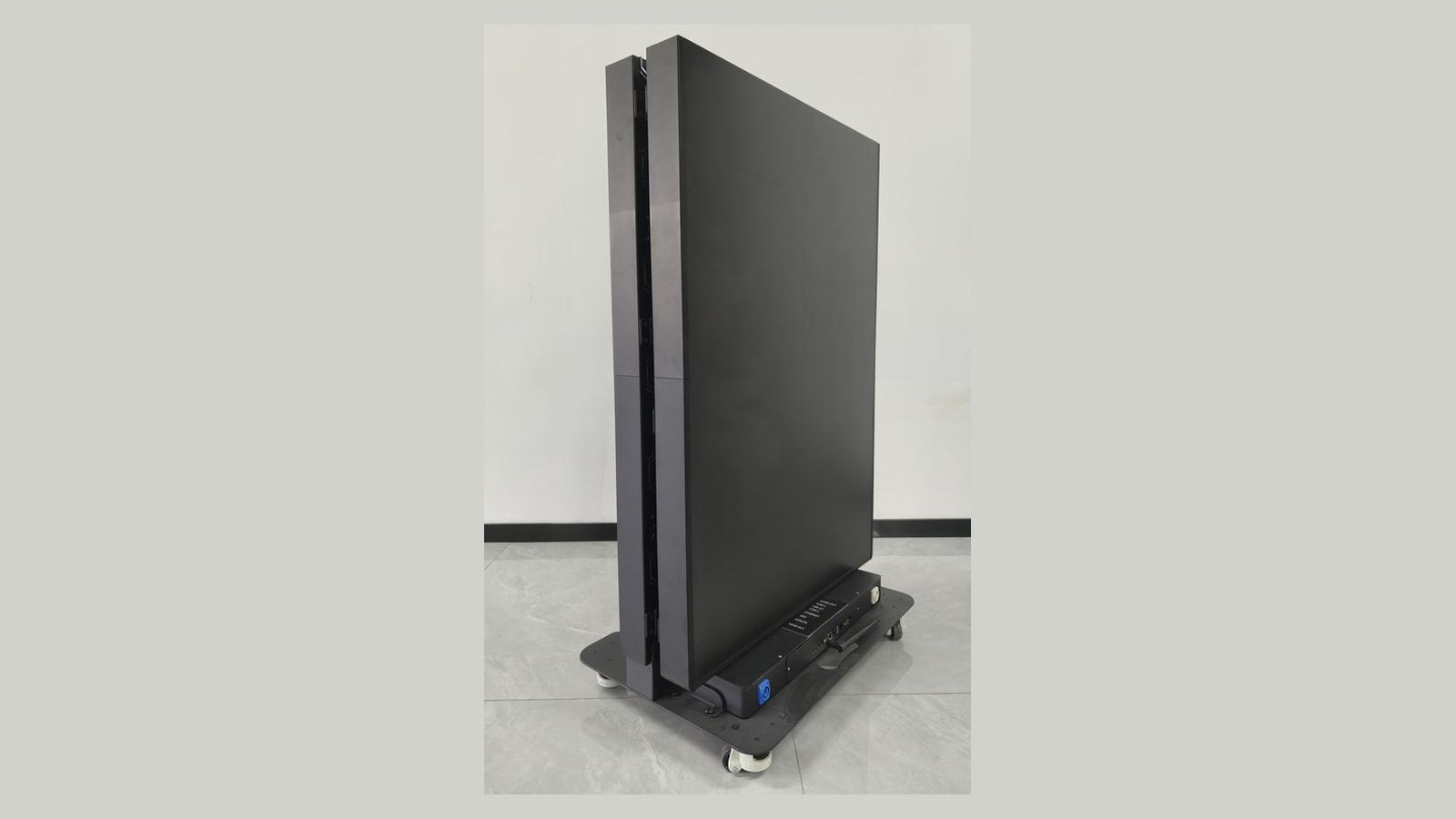
The fixed and foldable cabinets are serviced from the back; the die-cast foldable is serviced from the front. All three can be daisy-chained. A fixed poster suits a permanent position. The foldable versions suit posters that are moved or set up repeatedly. See cabinet types explained for how the cabinet differs across the whole range.
Resolution and pitch: choose the picture quality
Every poster in the range has the same screen size: 640 × 1920 mm. What changes with the pixel pitch is how many pixels fill that size. On the outdoor poster, P2 shows 320 × 960 pixels and P5 shows 128 × 384, about one sixth of the pixels in total. More pixels give sharper text, cleaner edges and let viewers stand closer. The cabinet decides how you service and move the poster. The pitch decides how the picture looks.
Choose the pitch from the distance of your nearest viewer. The minimum viewing distance in meters is roughly the pitch in millimeters.
| Pitch | LED | 1 poster (640 × 1920 mm) | Pixels per poster | 2 posters (1280 × 1920 mm) | 3 posters (1920 × 1920 mm) | Viewing distance |
|---|---|---|---|---|---|---|
| P2 | Not stated | 320 × 960 | 307,200 | 640 × 960 | 960 × 960 | from 2 m |
| P2.5 | SMD1515 | 256 × 768 | 196,608 | 512 × 768 | 768 × 768 | from 3 m |
| P3.076 | SMD1515 | 208 × 624 | 129,792 | 416 × 624 | 624 × 624 | from 3 m |
| P4 | SMD1921 | 160 × 480 | 76,800 | 320 × 480 | 480 × 480 | from 4 m |
| P5 | SMD1921 | 128 × 384 | 49,152 | 256 × 384 | 384 × 384 | from 5 m |
Two posters make 1280 × 1920 mm (portrait, about 2:3) and three make 1920 × 1920 mm (square); the pixel counts are for the whole joined screen. Test your own artwork at the distance of your closest viewer before you order.
Where it is used
Retail and hospitality. At a storefront, P3.076 (208 × 624 px) or P4 (160 × 480 px) suits passers-by from 3 to 4 m and further. On a restaurant terrace, where guests sit 2 to 3 m away, P2 or P2.5 keeps menu text sharp. A hotel entrance can carry welcome messages, events of the day and directions. The poster is quiet next to diners.
Events and festivals. Schedules, sponsor loops and wayfinding at an entrance or in an open area, usually with P4 or P5. The foldable versions fold to a 960 mm height for transport, and a flight case is Optional.
Conferences and exhibitions. Session schedules and registration information outside the hall. For setup and teardown in several venues, choose a foldable version.
Transport and campus. Schedules, service notices and directions at station forecourts and pick-up zones with P4 or P5 for viewers further away. Campus entrances can carry event calendars and directions; a fixed poster suits a permanent spot.
Specifications
Display
| Parameter | Value |
|---|---|
| Screen size | 640 × 1920 mm (25.2 × 75.6 in), 1.23 m² |
| Modules | 24 modules of 320 × 160 mm |
| Pixel pitch | P2, P2.5, P3.076, P4, P5 |
| Resolution | 320 × 960 (P2), 256 × 768 (P2.5), 208 × 624 (P3.076), 160 × 480 (P4), 128 × 384 (P5) |
| Brightness | From 4500 nit |
| Refresh rate | ≥3840 Hz |
| Gray scale | 14 bit |
| Driver IC | SM16169SH |
Cabinet, power and protection
| Parameter | Value |
|---|---|
| Versions | Fixed, foldable (folds to 960 mm height), die-cast foldable |
| Service | Front: die-cast foldable. Rear: fixed and foldable |
| Weight | about 54 kg (fixed version) |
| Power supplies | 4 × 300 W; power supply can be changed (Optional) |
| Power consumption | Given per pitch in the quotation |
| Protection | IP54 |
Control and content
| Parameter | Value |
|---|---|
| Control system | NovaStar + Mean Well PSU (default); Huidu or Colorlight (lower-cost option) |
| Content updates | Wi-Fi, LAN or USB; 4G Optional |
| Scheduling | Playlists and brightness by time |
NovaStar is a popular choice. Receiving cards and controller are matched to one brand, so name your system when you ask for a quote.
Options
Optional: built-in speaker; 4G module; flight case or wooden crate; OEM logo, labels, packaging and documents.
Daisy chain: wider screens from several posters
Posters stand side by side. The video signal runs from the HDMI output of one poster to the input of the next, and the control card in each poster is exchanged for a cascade version. Pitches never mix in one chain. This type of joining is also called splicing.
| Posters | Screen | Shape | Resolution at P3.076 | Resolution at P2.5 |
|---|---|---|---|---|
| 1 | 640 × 1920 mm | Portrait, 1:3 | 208 × 624 | 256 × 768 |
| 2 | 1280 × 1920 mm | Portrait, about 2:3 | 416 × 624 | 512 × 768 |
| 3 | 1920 × 1920 mm | Square | 624 × 624 | 768 × 768 |
| 4 | 2560 × 1920 mm | Landscape, 4:3 | 832 × 624 | 1024 × 768 |
The number of posters in one cascade is set by the total pixel count that the controller and its receiving cards can drive, so it depends on the pitch: a finer pitch puts more pixels in each poster, so fewer posters fit on one controller. We calculate it for your layout. Give us the total width you need.
Packaging and shipping
Each outdoor poster ships in a cardboard box with foam inserts as standard (included in the base price). A flight case for 1 poster and a wooden crate are Optional. The packing list for your order states the weight and size of every piece. See packaging and shipping. We sell EXW / FOB Shenzhen: we prepare the goods and export documents, and you arrange freight, duties and import compliance. Price, MOQ and lead time are quoted per order. Samples are available.
Compare with the indoor die-cast 640
| Outdoor 640 (this page) | Die-cast LED poster, 640 mm | |
|---|---|---|
| Brightness | From 4500 nit | From 500 nit |
| Use environment | Outdoor | Indoor only |
| Service | Front (die-cast foldable); rear (fixed and foldable) | Front, magnets and suction cup |
| Pixel pitches | P2 to P5 | P1.25 to P3.076 |
| Resolution of one poster | 128 × 384 to 320 × 960 px | 208 × 624 to 512 × 1536 px |
| Screen size | 640 × 1920 mm | 640 × 1920 mm |
Choose the outdoor poster for a position that faces daylight outdoors. Choose the indoor poster for rooms, including rooms with windows, where 500 nit is enough and finer pitches matter. See all LED posters.
Questions about this poster
We have specific weather or washing requirements. What should we do?
Tell us when you order and we will discuss it. The poster is built for outdoor use, and typical outdoor posters are designed for rain protection. Describe the site, for example how exposed it is, how the poster will be mounted and how you plan to clean it, and we advise on the setup in the quotation.
What is the difference between fixed, foldable and die-cast foldable?
The screen, the modules, the brightness and the pitches are the same. The cabinet differs: the fixed version has one receiving card and does not fold; the foldable version has two receiving cards and folds to a height of 960 mm; the die-cast foldable version has a die-cast cabinet, four receiving cards and folds as well. All three can be joined side by side.
Will I be able to read it in direct sun, and can I dim it at night?
The panel starts at 4500 nit, about nine times the starting brightness of our indoor posters, so it is made for daylight. As with any LED screen, direct sun on the front lowers contrast. Where you can choose the position, face the poster away from the low sun, and use the player to schedule brightness by time: bright in daylight, lower in the evening to avoid glare and cut consumption.
Can I use the outdoor poster indoors, behind a sunny store window?
Yes, if you need the brightness. The panel starts at 4500 nit, against 500 nit for our indoor posters, so it is the one to look at for a window that gets direct sun. In ordinary indoor light that much brightness is not needed: the player schedules brightness by time, and the indoor posters are the better fit.
Which pixel pitch should I choose for a sidewalk or entrance?
Work from the nearest viewer. The minimum viewing distance in meters is roughly the pitch in millimeters, so P3.076 suits people from about 3 m and P4 from about 4 m. For a terrace or a door where guests stand 2 to 3 m away, look at P2 or P2.5. For forecourts and larger open areas, P4 or P5 is the usual choice.
How many pixels will my poster have?
It depends on the pitch. A 640 × 1920 mm outdoor poster shows 320 × 960 pixels at P2, 256 × 768 at P2.5, 208 × 624 at P3.076, 160 × 480 at P4 and 128 × 384 at P5. The size is the same; the pixel count sets how sharp text and logos look and how close viewers can stand.
Our country uses a different plug and power standard. Can you supply it, and how much power does it need?
Yes. Tell us your country and your local requirements, and we match the power cord. We ask for all your local requirements up front so the order matches. See power plugs and voltages by country. The poster has four 300 W power supplies; power consumption depends on the pitch and the content, and the quotation gives the figures for your configuration. Power supply can be changed (Optional).
Can I chain several outdoor posters into one screen?
Yes, the outdoor posters are joinable. Pitches never mix in one chain. The video signal runs from the HDMI output of one poster to the input of the next, and the control card in each poster is exchanged for a cascade version. Two posters make 1280 × 1920 mm and three make 1920 × 1920 mm; the number of posters in one cascade is set by the total pixel count that the controller and its receiving cards can drive, so it depends on the pitch: a finer pitch puts more pixels in each poster, so fewer posters fit on one controller. We calculate it for your layout. Give us the total width you need.
Where do I need access to service the die-cast poster?
Only at the front. Modules are held by magnets and come out from the front, so no rear access is needed and the poster can stand flat against a wall or in a tight row. Switch the power off before service.
Where do I need access to service the fixed and foldable versions?
From the back. The fixed and foldable cabinets are serviced from the rear, so place them with enough space behind the poster to reach the back. Switch the power off before service.
Which control system should I choose, and how do I update content?
NovaStar control with Mean Well power supplies is the default set, Huidu or Colorlight is a lower-cost option. Pick the system your team already uses or the one your software supports. Receiving cards and controller are matched to one brand, so name your system when you ask for a quote. Content is updated over Wi-Fi from a phone or laptop, over LAN or from a USB stick; 4G is Optional for remote updates, and the poster plays on its own with no computer connected.
Request a quote
Request a quote and tell us: the version (fixed, foldable or die-cast foldable), the pixel pitch, the quantity, the destination country, your control system (NovaStar with Mean Well PSU by default; Huidu or Colorlight as a lower-cost option), the total width if you want a chain, and any options (speaker, 4G, flight case, OEM). Price, MOQ and lead time are quoted per order. Samples are available.